US L&D teams face a hard version of this problem. Employees sit in different locations and work different schedules. Meanwhile, the same team may need to support onboarding, compliance, leadership, software adoption, and ongoing skill development.
This guide covers four models, how to pick one, how to build and launch it, which technology to evaluate, and how to measure results.
Key Takeaways
- Four common models are flipped classroom, rotation, flex, and enriched virtual, though labels vary.
- Pick the model from the learning objective, skill type, workforce, and facilitator capacity.
- Strong programs link digital prep, live practice, manager reinforcement, and follow-up assessment.
- An LMS should hold content, live sessions, progress, reporting, and security in one system.
What Corporate Blended Learning Means
Definition and core components
Corporate blended learning is an intentional mix of asynchronous digital learning and synchronous or instructor-led experiences. Practice, coaching, assessment, and on-the-job application reinforce both modes. Training Industry's definition describes combining a virtual or in-person classroom with an eLearning environment, so physical attendance is not required.
Each component has a role:
- Digital content establishes foundational knowledge
- Live sessions support discussion, role-play, and feedback
- Coaching and job aids reinforce behavior after training
Blended vs. hybrid vs. pure eLearning
Terminology is inconsistent. ATD has used "hybrid" and "blended" interchangeably.
A practical distinction helps: blended describes how a learning journey is sequenced, while hybrid describes learners joining one live session from different places (some on-site, some remote). A fully online program with virtual classes plus self-paced work is blended, but not hybrid.
Pure eLearning works well for informing people. Add live elements when learners need discussion, feedback, role-play, or hands-on practice.
Why it matters, and where it falls short
The honest evidence is mixed. A 2023 randomized trial of 373 mostly employed participants found blended participants showed greater compliance, but effectiveness did not generally differ from web-only training. Treat blending as a conditional benefit, not a guaranteed win.
Realistic upsides include:
- Scheduling flexibility
- Consistent delivery across teams
- More practice time
- Better use of instructor hours
Common pitfalls:
- Fragmented tools and duplicate administration
- Digital fatigue
- Weak manager follow-through
- Accessibility gaps
- Formats added with no clear learning purpose
Four Corporate Blended Learning Models
These four models are an adapted selection, not a single official taxonomy. The Christensen Institute's original K-12 work used Rotation, Flex, A La Carte, and Enriched Virtual, and treated flipped classroom as a Rotation subtype.
Earlier labels included Face-to-Face Driver and Online Driver. Corporate teams borrow and adapt these terms.
Flipped Classroom Model
Learners complete foundational content independently, then use live time for questions, scenarios, role-play, feedback, and problem-solving.
Corporate examples include:
- Compliance prework followed by case analysis
- Leadership modules followed by a manager workshop
Boeing, as described by Training Industry in 2019, has employees complete eight small web lessons before a four-day live course, then work on a real capture effort. Early feedback was positive, though performance data were still being compiled.
Rotation Model
Learners move through a defined sequence of digital lessons, live instruction, collaborative activities, practice, and assessments. The schedule can be fixed or set by the instructor for each learner.
It suits structured onboarding, technical training, certification pathways, and role transitions, where everyone needs a predictable progression.
Flex Model
Employees control the pace of digital learning, while instructors, coaches, or subject-matter experts help at checkpoints or on request. It fits distributed teams, professional development, and fast-changing product knowledge.
The risk is passive completion. Set clear milestones and accountability.
Enriched Virtual Model
Most learning happens online. Planned workshops, coaching sessions, or in-person touchpoints handle alignment, practice, complex discussion, and relationship building.
A leadership program for a multi-location workforce is a natural fit. AECOM's Business Builders Circle, described by ATD in 2024, combines virtual and in-person experiences, coursework, and networking.

Comparing the models
| Model | Delivery balance | Best fit | Learner autonomy | Live sessions | Main risk |
|---|---|---|---|---|---|
| Flipped classroom | Online prep, live application | Compliance cases, manager workshops | Medium | Required | Learners skip prework |
| Rotation | Planned mix of modalities | Onboarding, certification | Low to medium | Scheduled | Rigid scheduling |
| Flex | Mostly self-paced | Distributed teams, product updates | High | Optional, on demand | Passive completion |
| Enriched virtual | Mostly online | Leadership, multi-site teams | Medium to high | Periodic | Live touchpoints feel disconnected |
How to Choose the Right Corporate Blended Learning Model
Start with the objective
Begin with what employees must know, do, or demonstrate afterward, not with the technology you own. Procedural accuracy, judgment, behavior change, and collaboration each call for a different mix of digital learning, live practice, coaching, and assessment.
Check workforce constraints
Evaluate locations, time zones, shifts, travel limits, device access, language needs, accessibility, and protected learning time. Then match the model to those constraints:
- Rotation for repeatable journeys
- Flex for high learner autonomy
- Flipped classroom when live practice is valuable
- Enriched virtual for distributed groups needing periodic contact
Match autonomy to facilitator capacity
Assess digital confidence, prior knowledge, and motivation against the availability of instructors, managers, and coaches. Self-directed does not mean unsupported. A 2018 meta-analysis of 32 studies found that feedback and coaching were the strongest predictors of training transfer. Build in checkpoints, progress visibility, and escalation paths.
Use 70-20-10 as a heuristic
The Center for Creative Leadership describes 70-20-10 as roughly 70% challenging experiences, 20% developmental relationships, and 10% coursework and training. CCL credits Robert Eichinger and Michael Lombardo with coining it. Critics, including a 2018 review by Alan Clardy, find the evidence for the 70% figure weak. Use it to remind yourself that formal training is only one part of learning, not as a budget formula.
Blended learning can serve all three parts: digital scenarios for experience, peer discussion for relationships, and modules for formal content.
Run a selection checklist
- What skill must change?
- Which parts need interaction or feedback?
- How much can learners do alone?
- What live resources exist?
- How will managers reinforce the skill?
- How will you measure success?

Choose the simplest model that meets the outcome. Combining formats to look innovative just adds content.
How to Design and Implement a Corporate Blended Learning Program
Define audience, gap, and outcomes
Identify the employee groups, the performance gap, the business requirement, prerequisites, and the observable behaviors you want. Use concrete verbs such as "repair" or "assemble" rather than "understand." Set baselines and success criteria before building content, so you can tell participation from learning.
Design a connected journey
Map what happens before, during, and after each experience: digital prep, live interaction, realistic practice, assessment, manager follow-up, and point-of-need support. Live sessions should build on digital work, not repeat it. Keep terminology, examples, and instructions consistent across formats.

Build in reinforcement and accessibility
- Job aids and microlearning refreshers
- Coaching questions for managers
- Peer discussion and follow-up scenarios
- Captions or transcripts, mobile-friendly layouts, and keyboard-friendly navigation
ATD's 2024 research found more than half of surveyed talent development professionals rarely or never ensure all learning elements are keyboard accessible. Keep standards and obligations distinct: WCAG is a technical standard, Section 508 covers federal ICT, and EEOC guidance covers employee accommodation.
Select technology for the whole journey
Evaluate an LMS for:
- Self-paced content and learning paths
- Live-session scheduling and attendance tracking
- Assessments and certificates
- Role-based assignment and permissions
- Progress reporting and dashboards
- Integrations, SSO, and security controls
- SCORM and xAPI support
Disconnected tools create duplicate administration, inconsistent learner records, unclear ownership, and no view of who finished which stage.
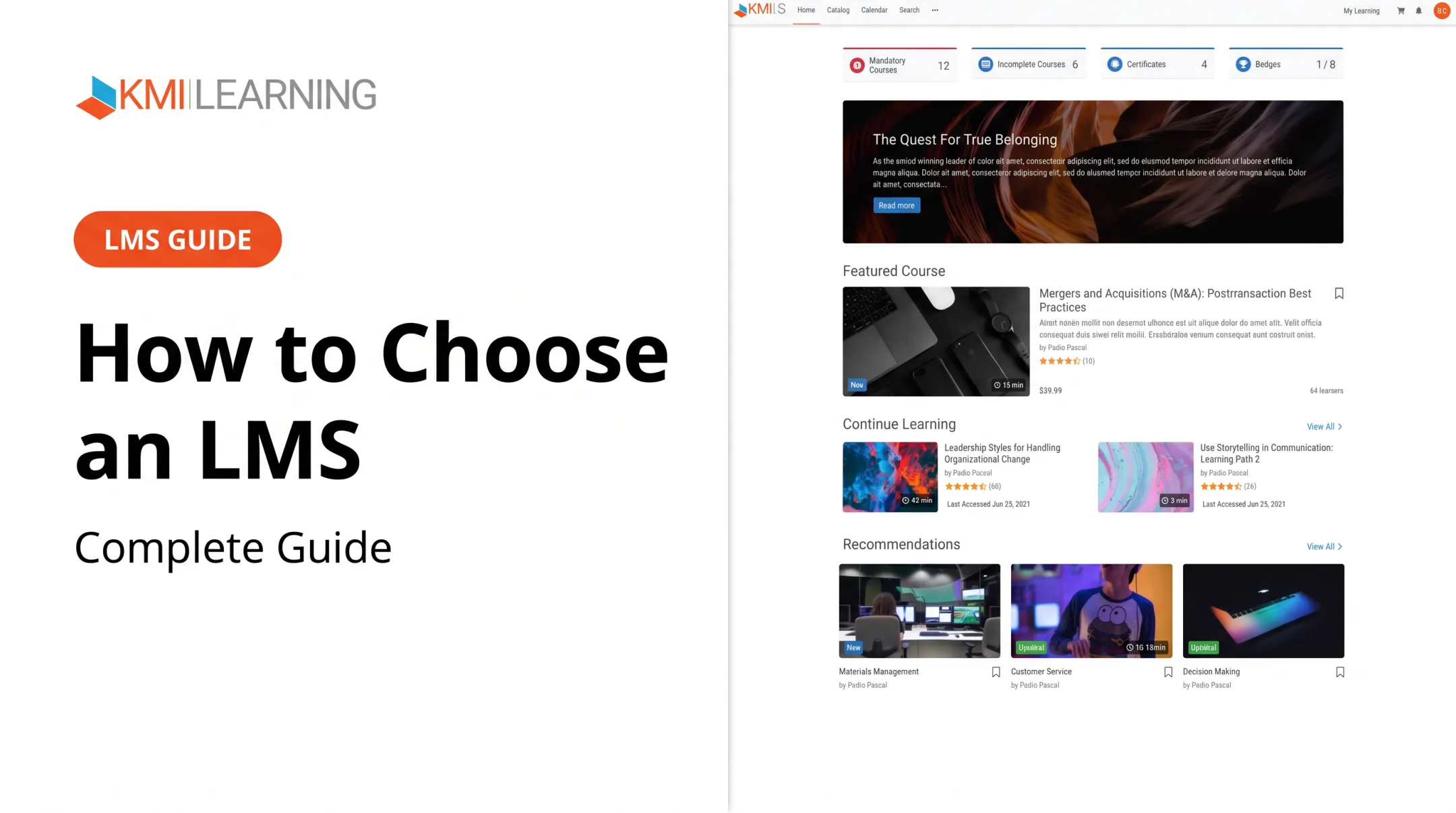
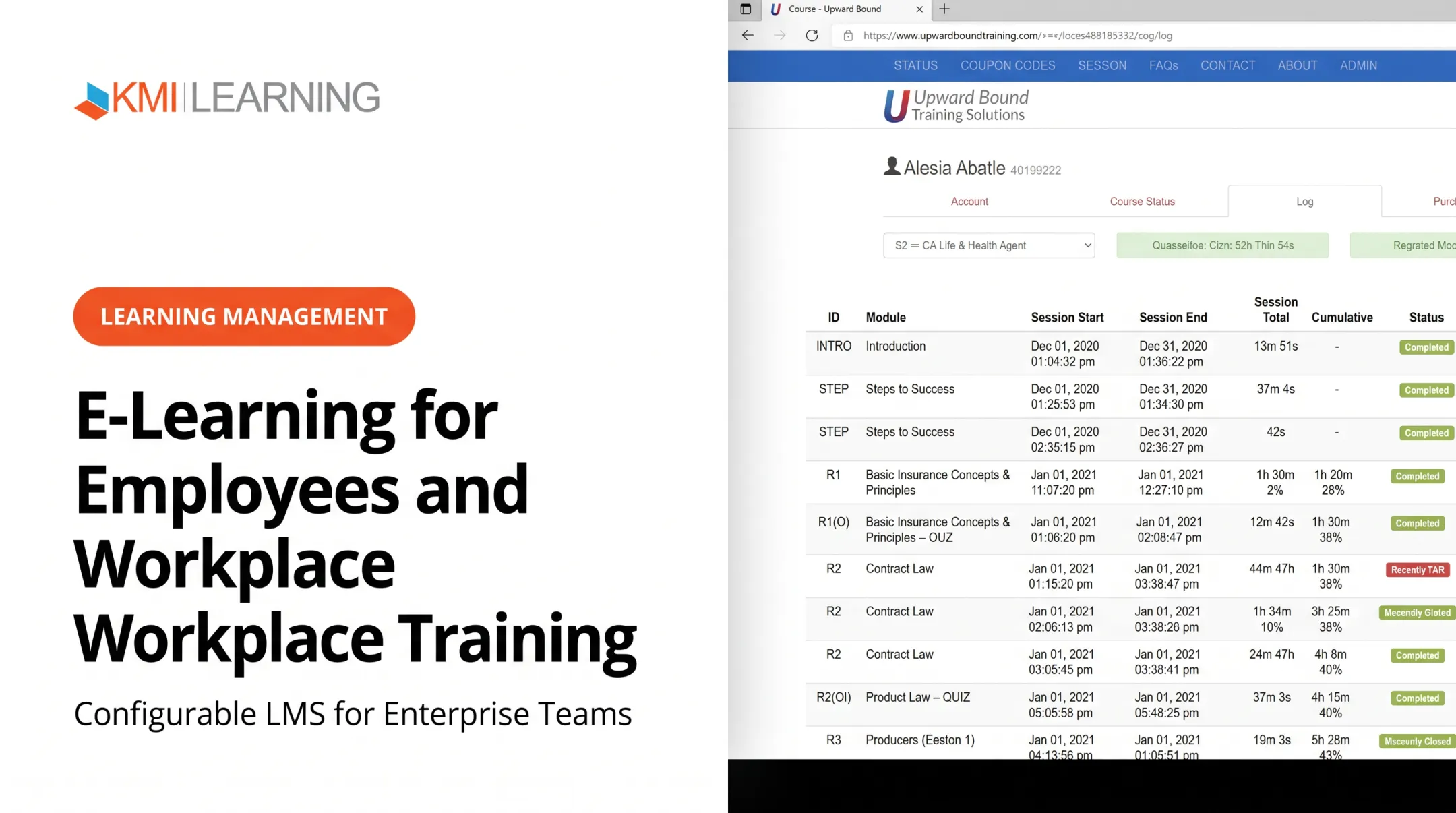
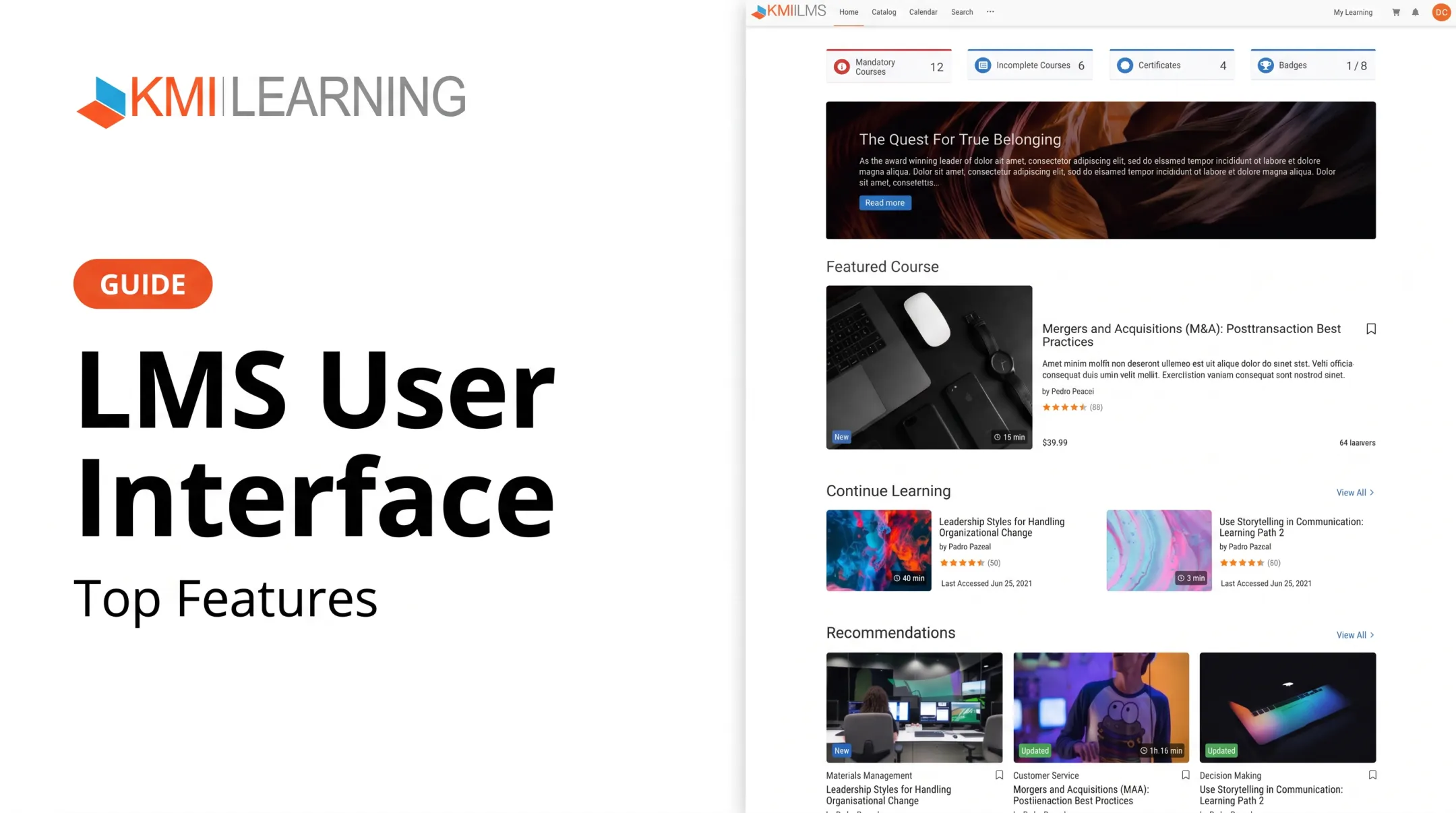
KMI Learning, a Columbus, Ohio-based provider, offers configurable, white-label LMS platforms for corporate teams with complex training needs. It supports online, live virtual, and in-person events, flexible integrations, custom reporting, and options for secure compliance training.
Its AI Course Builder can convert source documents into SCORM-compliant courses. That speeds production, but it does not replace instructional design. Confirm current capabilities against your requirements before you commit.
Pilot, measure, and improve
Pilot with a representative group. Gather feedback from learners, managers, facilitators, and administrators, and fix access and sequencing problems before scaling.
Measure beyond completion. The Kirkpatrick model separates four levels:
- Reaction: is training relevant and engaging?
- Learning: did knowledge, skill, and confidence grow?
- Behavior: is it applied on the job?
- Results: did targeted outcomes follow?

Also track assessment performance, live practice participation, manager observations, and time to competence.
| Launch risk | Corrective action |
|---|---|
| Low participation | Add manager nudges and protected learning time |
| Unclear instructions | Rewrite the learner roadmap and test it |
| Weak manager reinforcement | Provide check-in guides and coaching questions |
| Platform friction | Simplify login with SSO and fix navigation |
| Outdated content | Assign owners and review dates |
Conclusion: Choose the Model That Fits the Learning Outcome
Blended learning works when digital content, live interaction, practice, and reinforcement operate as one system. Start by defining the performance outcome. Compare the four models against your workforce realities, pilot the best fit, and use learner and business data to refine it over time.
Frequently Asked Questions
What are the four models of corporate blended learning?
Flipped classroom, rotation, flex, and enriched virtual. Other frameworks use different labels or add variations, such as A La Carte.
What is an example of corporate blended learning?
Online compliance prework, a live case-analysis workshop, workplace practice, manager reinforcement, and a follow-up assessment.
What is the 70-20-10 rule for corporate learning?
It describes roughly 70% experience, 20% relationships, and 10% formal training. It is a planning heuristic, not a fixed requirement.
What does corporate L&D mean?
Learning and development is the strategic function that builds employee knowledge, skills, and capabilities through programs, resources, and systems.
How do you choose the right corporate blended learning model?
Start with the learning objective. Then weigh skill type, workforce distribution, learner autonomy, facilitator resources, scheduling, technology, and measurement needs.
What technology is needed for corporate blended learning?
An LMS, content or authoring tools, live-session technology when needed, assessment and reporting, integrations, and security and access controls.