The scale is real. Census and AmeriCorps data show 75.7 million Americans volunteered through organizations between September 2022 and September 2023. Budgets rarely keep pace, and NTEN's 2024 report found 77% of respondents cite insufficient technology budgets.
This guide compares five platforms for different nonprofit use cases: KMI Learning, Moodle, TalentLMS, D2L Brightspace, and LearnUpon. It also covers how to evaluate free options, integrations, security, reporting, and scalability.
Key Takeaways
- The best LMS depends on your audience: staff, volunteers, members, or paying external learners.
- Judge platforms on enrollment flexibility, mobile access, accessibility, reporting, integrations, security, and support.
- Free or open-source software still carries hosting, administration, and maintenance costs.
- Confirm 2026 pricing, nonprofit discounts, security documents, and data export in writing.
Overview of Learning Management Systems in the US Nonprofit Sector
What a nonprofit LMS does
A learning management system is software for creating, delivering, administering, tracking, and reporting on learning. For nonprofits, the audience extends beyond employees to volunteers, members, partners, and community participants.
Nonprofit needs differ from standard corporate training in three ways:
- Learners are often seasonal, part-time, or external.
- Identities may live in a CRM or association management system.
- Boards, funders, accreditors, or regulators may demand evidence of completion.
A good LMS centralizes onboarding, compliance training, continuing education, certificates, course sales, and learner records. It also cuts repetitive administrative work.
One example: Moodle's case study of First Baptist Church Community Ministries describes roughly 3,000 active volunteers in Alabama trained on PREA and abuse policies, with completion reporting and emailed certificates. That is vendor-reported, but it shows how volunteer compliance drives LMS requirements.

The platforms below are chosen for distinct nonprofit needs, not as one universal ranking. Verify features and pricing against current vendor documentation before buying.
Top Learning Management Systems for Nonprofits in the US in 2026
We assessed each platform on nonprofit use-case fit, learner accessibility, administration, reporting, integrations, branding, scalability, implementation effort, support, and total cost of ownership.
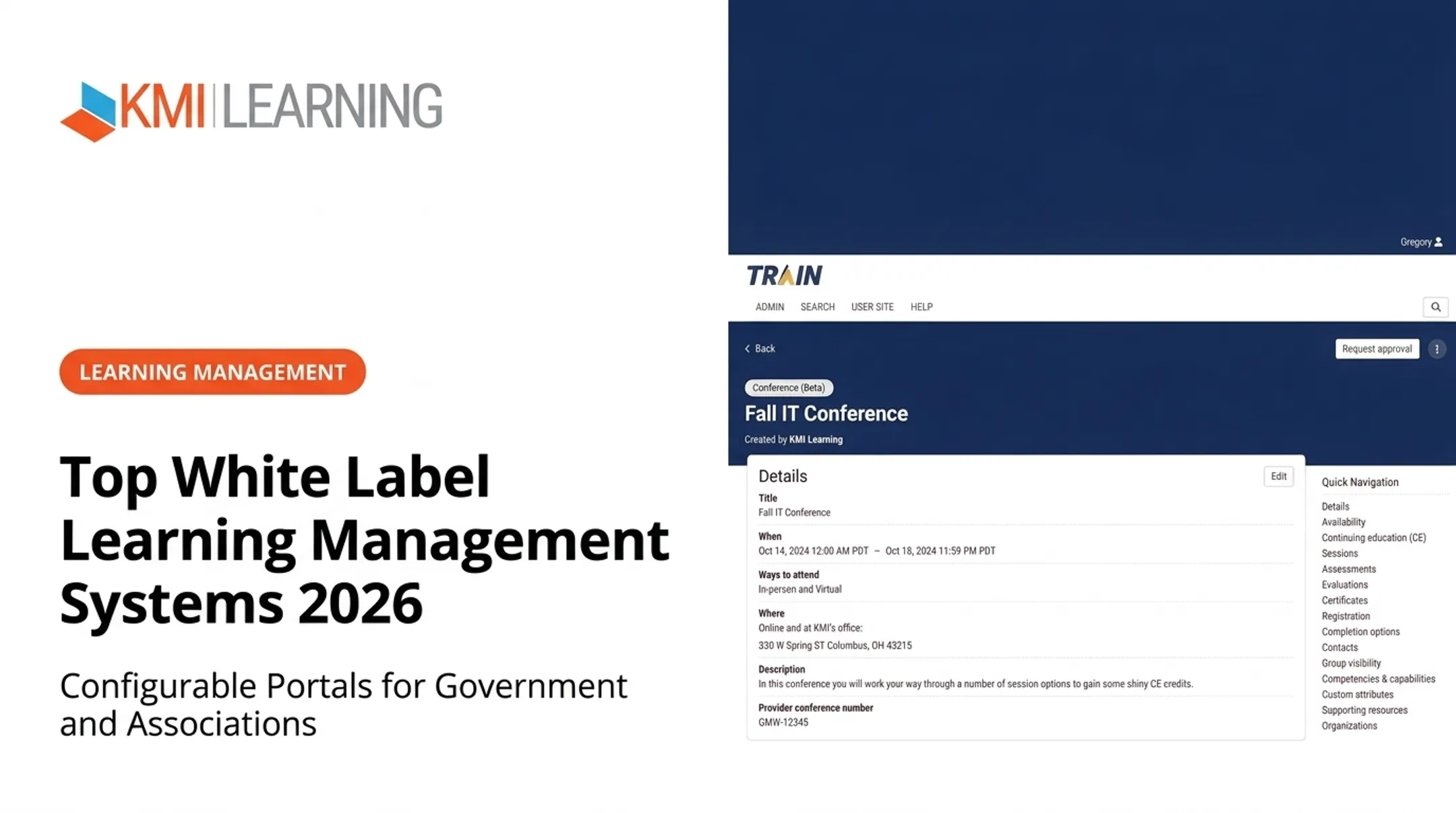
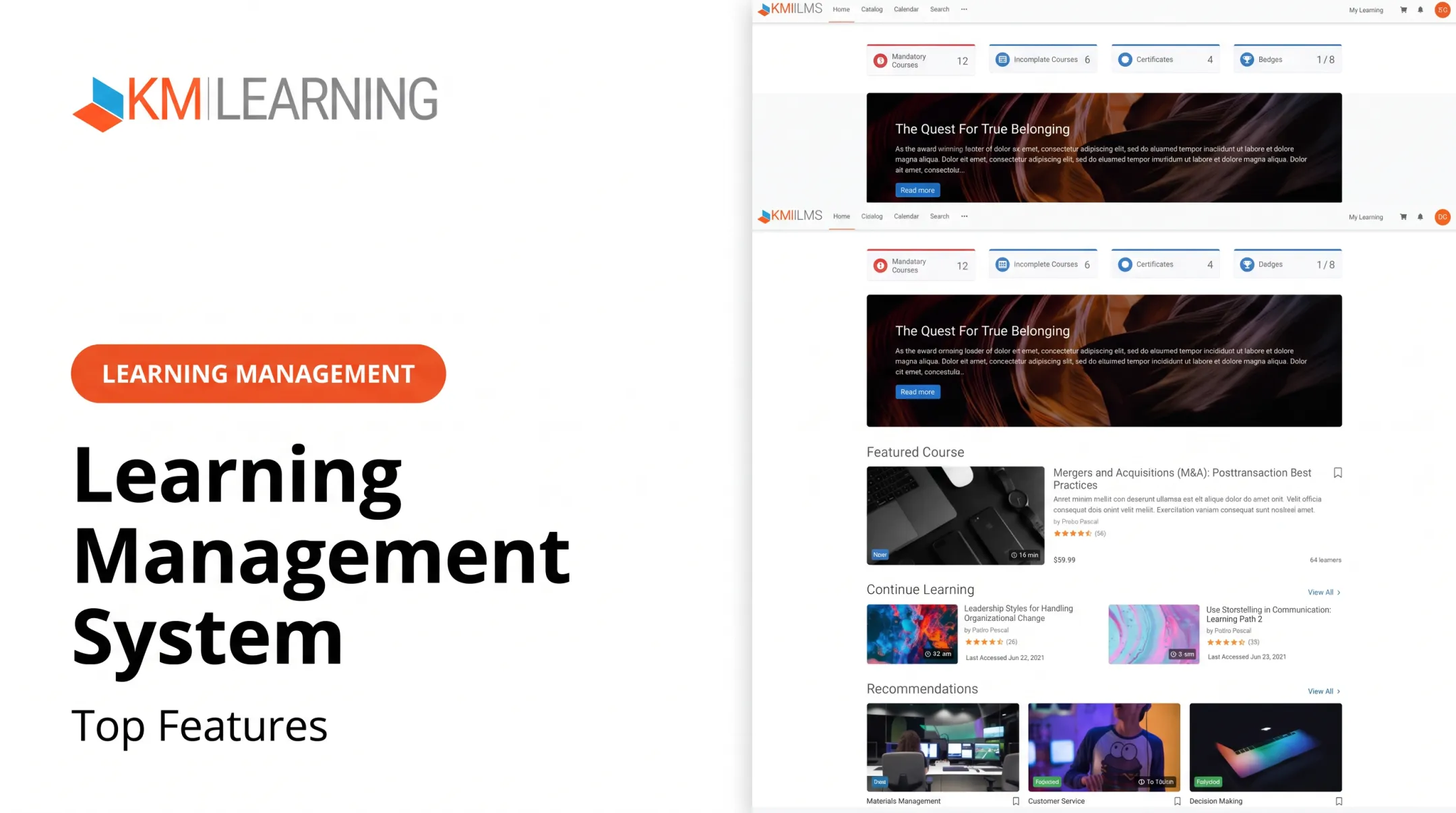
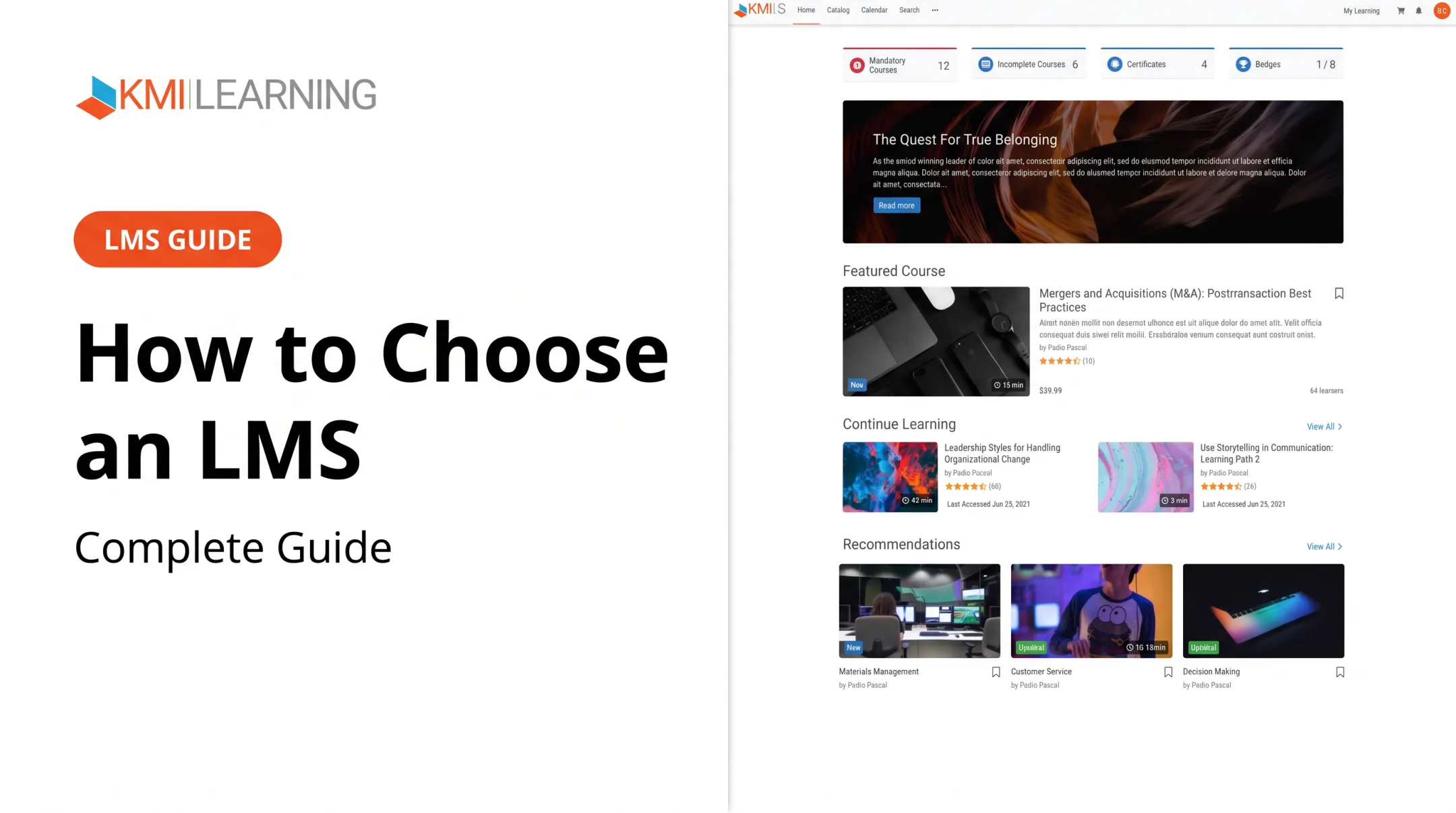
KMI Learning
KMI Learning is a Columbus, Ohio provider founded in 2000, with more than 25 years of building configurable LMS technology for associations, government agencies, nonprofits, and corporate teams.
It suits organizations with complicated requirements:
- Multi-tenant design for separate branded portals across chapters, affiliates, or partners
- White-label branding for logos, colors, and domains
- Continuing education tracking with credits, certificates, and renewal reminders
- Conference training and secure compliance programs
Nonprofits with seasonal staff, high turnover, and funder-driven compliance rules often need that mix of portals and CE tools. California's Community Action Partnership of San Luis Obispo faced the same pressure when classroom-only field training became costly and inefficient.
| Category | Details |
|---|---|
| Best fit | Nonprofits or associations delivering branded training, continuing education, certifications, or compliance programs to multiple audiences |
| Key capabilities | White-label portals; AI Course Builder that converts PDFs and slide decks into SCORM-compliant courses; custom report writer; REST API, Zapier, SAML 2.0 and OAuth 2.0; FedRAMP- and TX-RAMP-compliant variants available |
| Pricing and implementation | Pricing is not published. Pricing is by active-user tier with volume discounts, so request a use-case-based quote covering implementation, integrations, support, and ongoing administration |
Talented Learning named KMI top Customer LMS in 2016 and listed it in its Top 40 in 2021 and 2022. Those rankings are historical, so weigh them as background rather than a current scorecard. Confirm FedRAMP or TX-RAMP status for your specific deployment.
Moodle
Moodle is GPL open-source software. Nonprofits that want control over hosting, customization, and data management often shortlist it.
Capabilities to investigate include self-paced learning, plugins, SCORM, certificates, role-based access, reporting, and accessibility. Moodle's documentation follows WCAG 2.2. The mobile app plays SCORM 1.2 content online and offline.
The trade-off is cost. No license fee does not mean free. You still pay for hosting, security updates, backups, plugin management, support, customization, and administrator time. Moodle's Certified Partners sell many of these services.
| Category | Details |
|---|---|
| Best fit | Nonprofits with in-house technical expertise or a trusted Moodle partner, needing deep customization |
| Key capabilities | Hosted or self-hosted deployment; certificates; reporting; mobile app; CRM and single sign-on integrations via plugins |
| Pricing and implementation | Software is free; hosting, development, support, and maintenance are not. MoodleCloud plans ran from $160 per year (50 users) to $2,080 (750 users), billed in AUD |
TalentLMS
TalentLMS fits small or midsize nonprofits that want a simple interface, quick deployment, and manageable administration. It covers self-paced courses, assessments, certificates, notifications, mobile learning, and gamification.
Standards support includes SCORM 1.2, xAPI, and cmi5. The integration catalog lists Salesforce and BambooHR, though plan entitlements need confirmation.
Check limits around advanced reporting, complex audience segmentation, extensive white-labeling, multi-portal needs, and external course sales.
| Category | Details |
|---|---|
| Best fit | Small nonprofits needing onboarding, volunteer training, recurring compliance, or a first LMS |
| Key capabilities | SCORM, xAPI, cmi5; certificates; mobile app; integrations; basic reporting |
| Pricing and implementation | Free plan covers 5 active users and 10 courses; registered nonprofits get 20% off annual plans. Standard plans count active accounts, while Flex counts monthly logins |
D2L Brightspace
Brightspace is a scalable option for nonprofits needing structured learning paths, accessibility, multiple audiences, and detailed analytics. D2L's 2024 announcement named the National Association of Chronic Disease Directors, which moved from Moodle, and the Nebraska Health Care Association among its association customers. That shows association use, not universal superiority.
D2L publishes a March 2026 accessibility report covering WCAG 2.2 and Section 508, with documented partial-support exceptions. Read those exceptions.
| Category | Details |
|---|---|
| Best fit | Medium to large nonprofits or associations needing outcome-focused reporting and structured programs for diverse learners |
| Key capabilities | Performance+ add-on for custom dashboards and reports; accessibility tools; integrations; certificates; data exports |
| Pricing and implementation | Quote-based. Cost depends on user counts, features, implementation, support, and integrations |
LearnUpon
LearnUpon works for nonprofits managing separate audiences such as employees, volunteers, partners, and members. It offers multiple portals managed centrally, white labeling, certifications, automated communications, and e-commerce for selling courses.
Listed integrations include SSO, Salesforce, HubSpot, Zapier, and a two-way API. Support documentation states the learner experience conforms to WCAG 2.2 AA, but its public accessibility page carries older wording, so request the current report.
Ask about cross-portal reporting, audience permissions, CRM sync, and pricing as portals or active users grow.
| Category | Details |
|---|---|
| Best fit | Training-focused nonprofits needing several branded learning environments under one admin |
| Key capabilities | Multi-portal setup; certificates; reminders; integrations; reporting; e-commerce |
| Pricing and implementation | Quote-based. Starting audience sizes include 150 association users. No public nonprofit discount percentage, so ask directly |

How We Chose the Best Learning Management Systems
Brand recognition tells you little. A sound evaluation combines vendor documentation, current pricing pages, demos, independent reviews, and security and accessibility documents.
What to test
- Use-case fit: Can staff, volunteers, members, and external learners each get their own workflow?
- Learner experience: Check mobile responsiveness, low-bandwidth use, accessible content, reminders, certificates, and role-based permissions.
- Reporting and integrations: Confirm connections to your CRM, AMS, donor or volunteer database, and identity provider, plus exports for boards, funders, and accreditors.
- Compliance records: Certificates are not accreditation. IACET's standard ties CEUs to external verification and learner records.
Count total cost, not license price
Factor in more than the license line item:
- Implementation, content migration, and authoring
- Integrations, support, hosting, and security maintenance
- Administrator time, user-volume changes, and renewal terms
Star ratings will not fill those gaps. Capterra scores are product-wide, not nonprofit-specific: TalentLMS 4.7 (600 reviews), Moodle 4.3 (3,389), Brightspace 4.2 (240), LearnUpon 4.7 (141), and KMI 4.7 (just 10).

Mistakes to avoid
- Choosing a free platform with no technical owner.
- Buying an enterprise system for a simple volunteer orientation.
- Accepting unverified security claims. Ask for the actual SOC 2 report and scope.
- Skipping a test of the exact report and learner workflow you need after launch.
Conclusion
The best nonprofit LMS matches your audience model, mission outcomes, technical capacity, budget cycle, and training plans. The longest feature list is not the goal.
Before you commit:
- Build a requirements scorecard
- Test representative workflows in demos
- Get pricing and nonprofit terms in writing
- Confirm data export, accessibility, security, support, and integrations
Nonprofits or associations with complex branding, continuing education, certification, compliance, conference, or integration needs can talk through a configurable approach with the KMI Learning team.
Frequently Asked Questions
What are the top learning management systems for nonprofits?
This shortlist includes KMI Learning, Moodle, TalentLMS, D2L Brightspace, and LearnUpon. The strongest fit depends on whether you need volunteer training, open-source customization, multi-audience delivery, advanced reporting, or continuing education and compliance.
What is the best learning management system for nonprofits?
No single LMS wins for everyone. Match the platform to your audiences, delivery model, reporting duties, technical resources, integrations, and budget.
What are the best free learning management systems for nonprofits?
Moodle is free open-source software, and TalentLMS offers a free plan for 5 active users and 10 courses. Hosting, implementation, support, and staff time can still add cost.
What features should a nonprofit LMS have for staff and volunteers?
Look for self-paced and mobile learning, accessible content, automated reminders, role-based enrollment, assessments, certificates, progress tracking, and reporting. Integration with your existing nonprofit systems matters too.
How much does a nonprofit LMS cost?
Cost varies with users, portals, features, hosting, implementation, integrations, and support. Compare total cost of ownership and verify current 2026 nonprofit discounts.
Can a nonprofit LMS track certifications, continuing education, and compliance?
Many can track completions, certificates, renewal dates, credits, and required training. Confirm credit types, audit records, report formats, and any accreditor or regulator requirements first.